


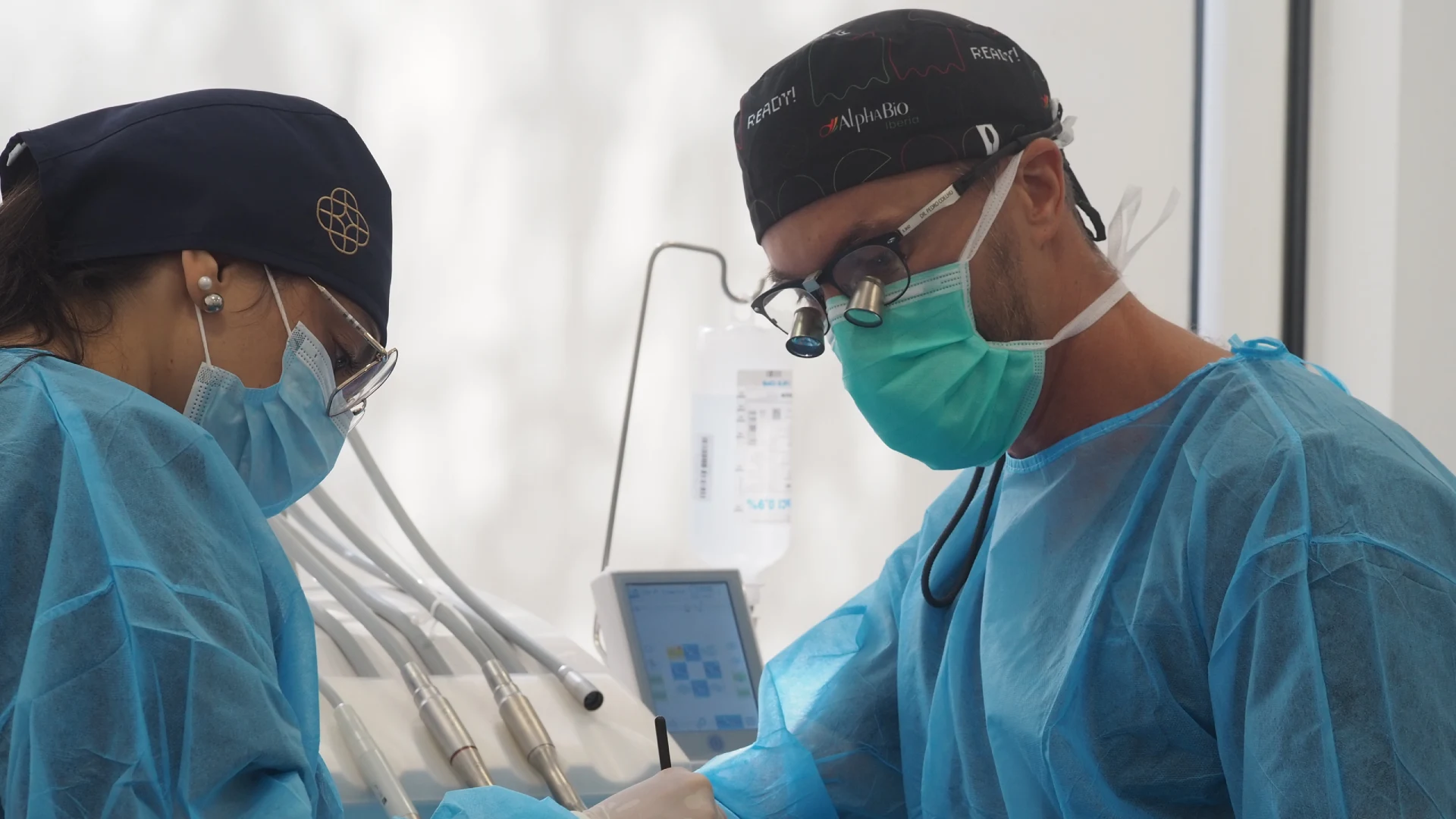
Dental implants in Oeiras with specialised surgery by Dr Pedro Coelho
Advanced Oral Implantology

Dental Implants in Oeiras

Dental implant treatment with titanium and, in selected single-tooth cases, zirconia implants, delivered to high clinical standards with rigorous 3D digital planning and an approach focused on precision, stability, chewing function and natural-looking aesthetics.

  • Premium treatment with a personalised approach
  • Titanium or zirconia implants
  • Long-term oral health, function and aesthetics
EXPLORE
Advanced Implantology

When should you consider a dental implant?

Tooth loss can result from extensive decay, fracture, periodontal disease or trauma. When this happens, it is important to assess the most appropriate way to restore chewing function and the aesthetics of the smile.

For many patients seeking to replace a missing tooth, a dental implant can offer a fixed and stable solution. The treatment involves replacing the root of the missing tooth with an implant, usually made of titanium and, in selected single-tooth cases, zirconia, which serves as a support for a custom-made crown, aiming to restore comfort, function and a natural appearance.

At the Dr Pedro Coelho Clinic in Oeiras, each case is assessed individually through a detailed clinical diagnosis and 3D digital planning, enabling the position of the implant to be determined with a high degree of accuracy and clinical precision.

The prolonged absence of teeth can cause changes in bite, displacement of adjacent teeth and progressive bone resorption.

Where clinically indicated, replacement with a dental implant can help to restore function and preserve the relevant oral structures.

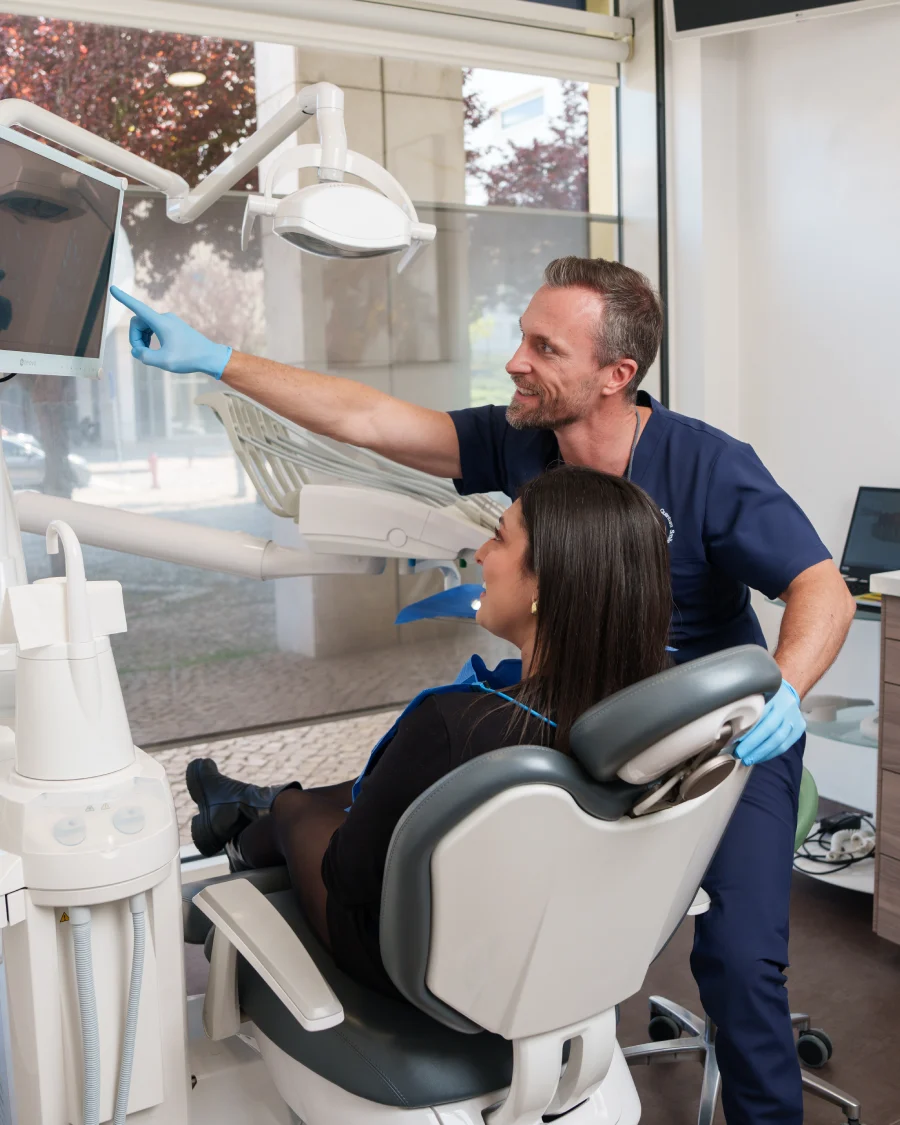
Dr Pedro Coelho explaining an X-ray to a patient during a dental implant assessment in Oeiras

Diagnosis combines detailed clinical assessment and 3D digital planning to define an approach suited to each patient’s anatomy and clinical needs, with high standards of clinical precision.

How does dental implant treatment work?

Treatment with dental implants follows a structured, phased approach, involving meticulous planning, defined clinical protocols and a focus on long-term stability.

At Dr Pedro Coelho Clinic in Oeiras, each stage of advanced oral implantology is carefully planned according to each patient’s anatomical and functional characteristics.

This approach makes it possible to replace missing teeth with a view to restoring chewing function, the aesthetics of the smile and the stability of the dentition.

Clinical infographics of dental implant parts with crown, abutment and implant body in titanium or zirconia
1

Clinical assessment and personalised planning

The first step towards having a dental implant is a detailed clinical assessment. This involves examining the condition of the bone, gums and structural elements of the oral cavity, as well as the patient’s medical history.

Where necessary, the planning process includes X-rays and 3D digital technology to precisely determine the position of the implant.

The aim is to establish appropriate three-dimensional positioning, whilst taking into account the anatomical and biomechanical criteria relevant to stability and long-term planning.

2

Dental implant placement

The implant is placed under local anaesthesia in a controlled clinical environment, following rigorous surgical protocols.

The implant is inserted into the maxillary or mandibular bone, replacing the root of the missing tooth and providing support for the future dental crown.

The clinic mainly uses titanium implants. In selected single-tooth cases, zirconia may be considered, depending on the clinical assessment and the anatomical and aesthetic conditions of each patient.

3

Osseointegration process

Once the implant has been placed, the osseointegration process begins; this is the stage at which biological integration between the bone and the dental implant takes place.

During this period, the implant undergoes healing and biological stabilisation, which are important stages for its long-term stability and function.

4

Placing the permanent crown

Once adequate osseointegration has been achieved, a personalised dental crown is placed on the implant.

The crown is designed to reflect the shape, chewing function and aesthetics of natural teeth, with the aim of restoring functional balance and harmony to the smile.

The fitting involves careful occlusal adjustment, with a focus on functional balance and comfort when chewing.

Clinical Solutions

Types of dental implant treatment

Dental implants can be used to replace a single tooth, several teeth or, where clinically indicated, to support more extensive fixed restorations.

At the Dr Pedro Coelho Clinic, each treatment plan is drawn up following a detailed clinical assessment and digital planning, taking into account masticatory function, aesthetics, bone conditions and structural balance.

Single-Tooth Dental Implant

Single-Tooth Dental Implant

When a single tooth is missing, an implant can replace the tooth root and support a bespoke crown, whilst preserving the adjacent teeth.

The treatment plan aims to combine function, stability and natural aesthetics in accordance with the clinical circumstances of each individual case.

Dental implants to replace several teeth

Dental implants to replace several teeth

When several teeth are missing, implants can support a bespoke fixed restoration, planned in accordance with the distribution of the missing teeth, bone conditions, masticatory function and the aesthetic requirements of each individual case.

This approach restores oral health, masticatory function and smile aesthetics through digital planning and fixed rehabilitation adapted to each case.

Full-Arch Rehabilitation with Dental Implants

Fixed full-arch restoration using dental implants

In cases of extensive or total tooth loss in one jaw, implants can support a fixed full-arch restoration.

The treatment plan takes into account bone quality and volume, gum health, occlusion, and each patient’s functional and aesthetic needs.

Where clinically indicated, the clinic also carries out immediate loading and All-on-4 procedures.

Bone grafting procedure for oral implantology in Oeiras with advanced surgical approach

Bone grafting and complementary procedures

In certain clinical situations, it may be necessary to perform a bone graft prior to implant placement, when the available bone volume does not provide the appropriate conditions for the planned treatment.

The decision is made following a detailed clinical and imaging assessment, taking into account the anatomy, bone support, the location of the implant and the specific requirements of each individual case.

A thorough assessment of the quantity and quality of the available bone is an important part of implant planning, enabling the selection of an appropriate approach and the identification of favourable conditions for stability during treatment.

Dental implant prices in Oeiras: what influences the price?

The price of a dental implant can vary according to different clinical, anatomical and structural factors. Each treatment plan is defined on a personalised basis after a detailed clinical assessment.

At the Dr Pedro Coelho Clinic in Oeiras, the diagnosis involves an assessment of the patient’s bone, gum and functional conditions, enabling the team to determine the most appropriate approach to replacing missing teeth, tailored to the needs of each individual case.

Personalised Clinical Assessment Before Dental Implant Treatment

Before starting any dental implant treatment, a full clinical assessment is carried out to understand the complexity of the case.

Through complementary clinical and imaging examinations, the specialist analyses anatomical, functional and systemic factors that can influence treatment planning and the final result.

This process enables a personalised treatment plan to be drawn up, based on clinical data and tailored to the specific needs of each patient.

Factors that can influence the cost of dental implants

The main factors influencing the cost of treatment include:

  • Number of implants required
  • Need for bone graft
  • Type of prosthesis to be fitted
  • Surgical complexity
  • Patient's clinical conditions

Each case is assessed on an individual basis to ensure that the chosen solution meets rigorous clinical criteria, taking into account functional stability, biomechanical balance and long-term objectives.

The final budget depends on personalised planning, the materials used and the complexity of the procedure required to restore your smile with dental implants.

Each stage of the treatment is carefully planned, with a focus on aesthetic integration, structural stability and long-term clinical function.

Why Choose Dr Pedro Coelho Clinic for Dental Implants in Oeiras?

Choosing a clinic for dental implant treatment should be based on clinical experience, rigorous diagnosis and personalised planning.

At Dr Pedro Coelho Clinic in Oeiras, each case is approached individually, combining advanced oral implantology, digital planning and structured clinical follow-up.

This approach adheres to high standards of clinical quality, with a focus on precision, functional stability and ongoing care throughout the treatment to replace missing teeth.

Training and Experience in Advanced Oral Implantology

Dr Pedro Coelho has specialised training in oral implantology and adopts an approach based on scientific evidence and up-to-date clinical protocols.

Each treatment is planned on an individual basis, with a focus on functional stability, a natural appearance and high standards of clinical rigour.

Detailed diagnosis and personalised planning

Before any dental implant is placed, a full clinical assessment is carried out.

Factors such as bone quality, gum health, occlusion and the patient's clinical history are analysed to define the most appropriate treatment plan.

Long-term follow-up and monitoring

Dental implant care continues beyond the surgical stage.

Regular clinical follow-up enables the assessment of osseointegration, the monitoring of peri-implant health and the monitoring of functional stability over time.

Controlled clinical environment and safety protocols

The treatments are carried out in a prepared clinical environment, following strict safety and control protocols.

The combination of clinical expertise, technology and detailed planning enables a controlled approach focused on precision, clinical safety and long-term stability.

Frequently Asked Questions

Frequently asked questions about dental implants

Dental implants are placed under local anaesthesia in a controlled clinical environment.

Most patients tolerate the procedure well. After treatment, some temporary discomfort may occur and is managed according to the clinical needs of each patient.

The time required for dental implant treatment depends on the clinical conditions and treatment plan of each patient.

After implant placement, a period of osseointegration is usually required, and its duration can vary according to factors such as bone quality and the planned treatment stages.

When well planned and monitored, a dental implant can be highly durable.

Long-term outcomes depend on factors such as good oral hygiene, regular follow-up appointments and appropriate clinical monitoring.

Many patients can be considered for dental implant treatment, but a prior clinical assessment is essential.

Factors such as bone quality, gum health, smoking habits and systemic medical conditions are evaluated before determining whether dental implants are appropriate for each case.

Bone grafting is not required in every case. It may be recommended when the available bone volume or condition does not provide adequate support for the planned implant treatment.

The decision is made after a detailed clinical and imaging assessment, taking into account the anatomical and treatment requirements of each case.

Dental implants are designed to replace the root of a lost tooth and support a customised crown, restoring chewing function and aesthetics.

Each case is planned individually, respecting strict clinical criteria.

Whenever there is tooth loss, excessive tooth mobility or a need for extraction, a clinical assessment is recommended.

Early assessment helps define the most appropriate approach and allows treatment to be planned according to the clinical conditions of each case.

Next Step

Book Your Dental Implant Assessment in Oeiras

If you are considering dental implants in Oeiras to replace missing teeth, book a personalised assessment at Dr Pedro Coelho Clinic. Your case will be evaluated individually to define the most appropriate treatment approach, with rigorous planning and high clinical standards.

BOOK A CONSULTATION