

Wisdom tooth extraction is a fairly common dental surgery, but it continues to generate many questions and even some apprehension. If you are experiencing pain, inflammation, or your dentist is recommending the removal of your wisdom teeth, this article is for you.
Here you'll find everything you need to know before surgery: when it's really necessary to have your wisdom teeth removed, how the procedure is done, what post-operative care involves, and how to ensure a smooth recovery.
What are wisdom teeth and why might they need to be removed?
The function of wisdom teeth
Wisdom teeth are the last molars to emerge, usually between the ages of 17 and 25. In the past, they played an important role in chewing tougher foods. Today, with the evolution of diet and facial structure, they often emerge without enough space, which can cause problems.
Common problems associated with wisdom teeth
When a wisdom tooth doesn't have enough space to erupt correctly, it can become “impacted” (stuck within the gum or bone), erupt crookedly, or push other teeth. These problems can cause pain, infections, cysts, and tooth misalignment.
When are wisdom teeth really necessary to remove?
Wisdom tooth extraction is recommended when there is:
- Persistent pain or inflammation
- Impacted or partially erupted wisdom teeth
- Formation of abscesses or infections
- Risk of misalignment of the remaining teeth
- Preventative indication before orthodontics (like Invisalign)
Symptoms indicating you should have your wisdom teeth removed
Pain and swelling
If you feel pain in the back of your mouth, especially when chewing, it might be time to consult your dentist. Swelling of the gum or even the face could indicate that a wisdom tooth is pressing on other teeth or causing inflammation.
Sore throat or infection (abscess)
An inflamed wisdom tooth can cause intense pain, redness, pus, and even a fever. These signs indicate an infection, often caused by bacteria accumulating around a partially erupted tooth.
Bad breath and difficulty opening the mouth
The infection can spread and make even simple actions like opening the mouth or swallowing difficult. Persistent bad breath is also a common symptom and can be associated with a build-up of bacteria in the wisdom tooth area.
How is a wisdom tooth extracted? Step-by-step surgical procedure
Initial assessment and examinations
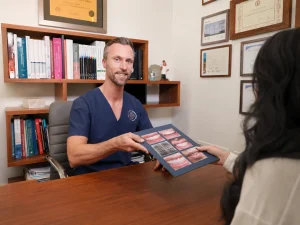
Before deciding to have a wisdom tooth removed, the dentist carries out a clinical and radiographic assessment. An X-ray allows them to see the exact position of the tooth and plan the extraction safely.
Types of anaesthesia used
Most extractions are performed under local anaesthesia. However, in more complex cases or when several wisdom teeth are removed at once, conscious sedation or general anaesthesia (in a hospital setting) may be recommended.
The surgical procedure explained simply
During the surgery, the dentist makes a small incision in the gum to access the tooth. If necessary, the wisdom tooth is cut into pieces to facilitate its removal. After removing the tooth, the area is cleaned and sutured. The entire procedure can take between 20 minutes and 1 hour.
Post-operative: Care and recovery time
What you can (and cannot) do in the first few days
In the first few days after having your wisdom teeth removed, it is essential:
- Avoid physical exertion
- No smoking or drinking with a straw
- Apply ice to the area to reduce swelling
- Take the prescribed medication.
- Do not touch the stitches with your tongue or a brush
For a complete and detailed list of recommendations after any dental surgery, see this article with the 13 post-dental surgery indications you should really follow.
Diet after wisdom tooth extraction
Prefer soft, cold, or room-temperature foods: soups, yoghurts, smoothies, and purees. Avoid hard, hot, or very spicy foods that could irritate the surgical area.
How long does full recovery take?
Most people feel significant improvements within 3 to 5 days. Complete healing can take up to two weeks. In simpler cases, you can return to your normal routine in a few days, provided you follow your dentist's instructions.
Possible complications and when to contact the dentist
Signs of infection or abnormal bleeding
If bleeding continues for more than 24 hours, or if fever, pus, or severe pain develops, contact your dentist immediately. This could be an infection or a complication such as dry socket.
Difficulty in healing or prolonged pain
Pain that does not improve after a few days may indicate a complication. In these cases, it may be necessary to return to the clinic for an assessment.
Sensation or numbness in your lips
In some cases, especially when the wisdom tooth is very close to the nerves, temporary numbness in the lips or chin may occur. Although rare, this situation should be monitored by the dentist.
Wisdom tooth extraction in Lisbon: Book your appointment with a specialist
At Dr. Pedro Coelho Dental Clinic in Oeiras, we have a specialist team in oral surgery ready to welcome you. We use advanced diagnostic technology, safe anaesthesia, and guarantee attentive follow-up at all stages of the process, from assessment to post-operative care.
If you're in pain, have an inflamed wisdom tooth, or want to prevent future problems, book your appointment with us. Take care of your oral health with the experts.
Perguntas frequentes sobre a extração do siso
Does having your wisdom teeth removed hurt?
No. The procedure is performed under local anaesthetic. There may be some discomfort in the following days, but it can be managed with medication.
Is it mandatory to have all wisdom teeth removed?
No. They are only removed when there is a clinical indication, such as pain, infection, or risk to other teeth.
How much does it cost to have wisdom teeth removed?
The cost can vary depending on the complexity of the extraction and the number of teeth to be removed. It is ideally recommended to schedule a personalised assessment.
How long should I wait to go back to work?
In most cases, 2 to 3 days are sufficient to resume light activities. It always depends on the type of work and the complexity of the surgery.