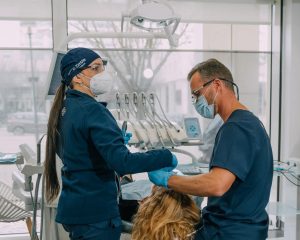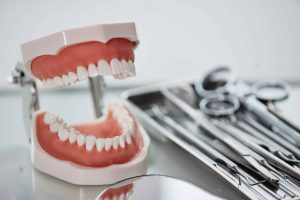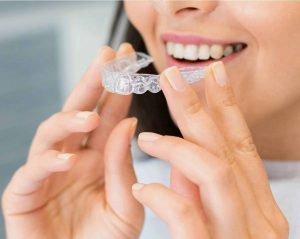


Dental prostheses, or false teeth as they are also known, play a fundamental role in the life of the person who uses them, as they allow them to chew, swallow, speak, and have the appearance of their smile improved.
Dental prostheses are capable of a great deal, considering they are structures made from resins or acrylic that serve to replace lost teeth. Therefore, it is extremely important that you feel comfortable with it.
First, it must go through an adjustment period, if it hasn't already, during which the dentist makes a series of adjustments until the denture fits your mouth.
If irritation occurs or the denture moves and causes small sores inside the mouth, This means it is not properly fitted. Furthermore, if it is not cleaned properly, it can produce dental epulis and food debris tends to accumulate.
To avoid discomfort, bacterial build-up, poor diet, or other problems like gingivitis or periodontitis, take note of the following 3 mistakes you are surely making when cleaning your dentures and that you should avoid.
1. Soak the dentures in bleach
If you have, stop doing it from now on, because substances like chlorine are abrasive and damage the prosthesis and gum.
It is best to leave your denture in a glass of water overnight after brushing it with a medium brush and regular toothpaste. You can also use cleaning tablets sold for this purpose. This will help to remove tartar and food build-up.
Always pay attention to the gum area and underneath the pink base; proper cleaning is important to help the denture last longer and maintain its attractive colour.
2. Let the hooks touch the gums
These hooks must be attached to the teeth and not the gums. Remember that to tighten the prosthesis, these were applied to the teeth, so that no wounds are made and more delicate problems are created.
Unless you wash your dentures once a day, you are damaging the clasps. Be careful with food, wash your dentures after every meal and not just once a day, as it is possible for there to be contact between bacteria and your gums every time you eat.

3. Never take it off
It is a mistake to never remove your dentures. Your gums need to rest, so it is best to remove the dentures at night or at various times during the day, allowing the tissue to recover and preventing ulcers or excessive bacteria buildup in the mouth.
Other products you should be careful with
The prosthesis can be cleaned with special products or pastes created for this purpose, but never with detergents or acidic products. You should also avoid scrubbing the prosthesis with cleaning products that have a granular texture, such as bicarbonate of soda or hydrogen peroxide.
The idea is to keep your dentures as clean as the day you first wore them. If you're looking for more reliable products, use special denture cleaning adhesives.
They apply easily and help to hold your bridge or denture in place. They offer a quick and invisible solution that also prevents food particles from getting trapped between your gums and your bridge.
So, how do I clean my dentures at home?
The procedure doesn't need to be mysterious or involve the risk of exposing the prosthesis to undesirable products. Cleaning should be easy, whether you are at home or out and about.
Remove the prosthesis
Brush it with a special denture brush, using cold water and mild soap. Clean all areas thoroughly, both the pink and metallic parts, if any.
Don't forget to leave a glass of cold water in it overnight, and do not rub it with any other substance.
–.Remove the prosthesis
Then, put it in its box. If you put it away before it's dry, you'll encourage the growth of micro-organisms and fungi.
Brush your teeth
Do this as a matter of course, regardless of the number of teeth your denture has. Furthermore, it must be incorporated into your cleaning routine as another vital step. Obtain special denture cleaning tablets and dissolve one in a glass of water every night.
There are several brands that sell this type of denture adhesive, such as Corega, Kin, Lacer, among others.
Depending on the type of tablet you choose, check the details of its use, as some should dissolve over a few hours and others overnight.
If your dentures are in good condition, it is best to follow expert recommendations to prevent the accumulation of bacteria or other problems. Furthermore, this will ensure they last for many years, both aesthetically and functionally.
Another important point is not to neglect your annual check-up with your dentist, to ensure optimal maintenance of the prosthesis and to assess possible oral lesions, as well as general oral health.
Source clinicaferrusbratos.com, kukident.es, directoryodontologico.info