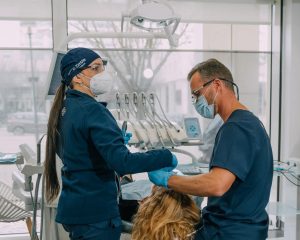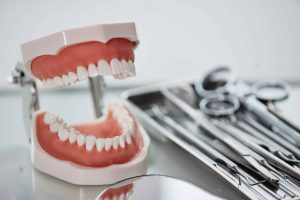



For those who do not yet know, orthodontics is a specialty of dentistry. Its purpose is the study, prevention, diagnosis, and treatment of abnormalities related to the shape, position, relationship, and function of dentofacial structures.
This specialty is increasingly sought after – becoming common – given that a large percentage of the population requires teeth repositioning, with some urgency. In some cases, it is your dentist who prescribes a specific brace, but, as a rule, it is the individual themselves who chooses their dental brace, based on their needs and according to their preference.
As you may know, there are various types of dental braces. However, the first consideration should be whether you need to use fixed or removable braces. This decision will always depend on your dentist's opinion.
If you require a solution for a more complex orthodontic problem, fixed braces allow for more effective repositioning and alignment, proving to be an ideal option for these types of situations. This is the case with “brackets”.
For less severe malocclusion problems – and only in very specific cases – a removable brace is recommended.
Even though there is this clear division between fixed and removable braces, it doesn't mean that in certain cases, both types aren't necessary. There are, in fact, many patients who require a combination of one and the other, depending on the issue in question.
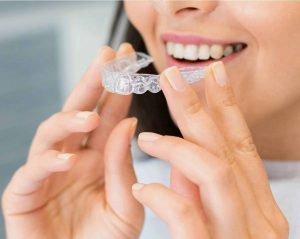
Fortunately, – and thanks to advances in this field – in addition to visible braces, there are now also invisible braces, such as Invisalign system. Although the aesthetic issue is of greater importance, what really matters is that the chosen device is suitable for your problem, and only a dentist can help in this regard.
Under no circumstances is it recommended that you fit your own preferred dental brace without first receiving instructions from your dentist. Pay special attention, as nowadays there are a number of illicit “clinics” that pretend to carry out this type of treatment for less money and end up harming the dental health of many patients.
Different types of braces in 2019
1.- Metal braces
Consisting of small metal pieces that attach to each tooth and are subjected to a metal wire, they are joined by a series of elastics – which are the true providers of teeth alignment and correction, while also securing the entire assembly.
These are the most conventional devices and are used by many people, regardless of age and gender.
Its main function is to reposition the teeth into their correct alignment so that the chewing process is adequate and, among other problems, to prevent overcrowding, as this makes correct and functional hygiene difficult.
Ceramic braces
Fundamentally, they have the same functionalities as metal ones, as they correct the same defects related to bite and alignment (smile, open or crossbite, overbite, gaps between teeth, and overlapping teeth, i.e.). However, their main attribute – in relation to traditional orthodontics – is the aesthetics of their design, since each piece mimics the natural tooth colour through different shades of white. Their brackets are ceramic and slightly smaller, in order to be completely unnoticeable.
3.- Lingual brackets
Designed to achieve better alignment, ease of speech, reduced abrasion, and fewer mouth sores, this is undoubtedly a highly innovative treatment that makes braces unnoticeable as they are placed on the inner side of the teeth, rendering them invisible when speaking.
However, if you think these also have the same corrective functionalities as the previous ones but, in addition to the aesthetic aspect, are technologically more advanced, made with gold alignment and a computer-designed layout – so that they are personalised and much more effective in how they carry out teeth correction – then the cost becomes relative, right?
In addition, the remaining types of brackets not only do not have this type of technology in their design, but they are also not manufactured to individual specifications nor do they feature such a rich material, being mainly produced in metal, porcelain or plastic.
4.- Invisalign Aligners
As previously stated, it is a technique applicable to removable appliances and consists of a plastic splint placed on the teeth. The piece will be remade to follow the repositioning of the teeth, keeping pace with their changes, adjusting to them to bring them to the desired position.
“The invisible alternative to braces allows for invisible orthodontics. It is an innovative procedure and the brace consists of a series of removable aligners, specifically and personally manufactured for each patient.
The entire treatment plan is digitally represented using 3D imaging, which allows you to see the final outcome in advance. These devices are manufactured according to each person's dental anatomy, taking into account the shape and variations of their teeth.
Aligners move teeth according to a series of carefully programmed and controlled movements, ensuring that each stage allows only the movement of specific teeth. The Invisalign system, unlike metal and ceramic braces, does not present any complications, proving to be a totally painless treatment.
It is clear that there are other variations of dental braces that, broadly speaking, fulfil the same functions of enhancing the smile and correcting teeth.
However, more importantly, it is worth highlighting that all these options are available depending on the orthodontist chosen, your particular needs, the budget you have available to spend, and the recommendations of the dentist, who ultimately will be responsible for assigning you the most suitable dental brace according to your needs.
Source bocasana.net